There is something almost magical about the right restaurant on the right evening. The conversation flows easier. The laughter comes quicker. And somewhere between the first course and the last sip of wine, two people feel closer than they did when they walked through the door. That is not a coincidence. It is design. The most romantic restaurants in the world are not romantic by accident. They are romantic because someone made hundreds of deliberate choices about light and sound and space and food and service, all in the service of one very human goal: making two people feel like they are the only ones in the room. Understanding what makes a restaurant romantic means understanding something deeper about how environments shape emotion, how atmosphere triggers memory, and how the right meal at the right table can quietly change the course of a relationship.
Why Atmosphere Does More Work Than the Menu
Most couples, when asked why a particular restaurant felt romantic, will mention the food somewhere in their answer. But when pressed to describe what they remember most vividly, they almost always talk about how the place felt. The softness of the light. The way the room smelled. The gentle hum of music in the background. The feeling of being enclosed in something intimate while the rest of the world continued outside. Atmosphere in a romantic restaurant is not decoration. It is the primary emotional instrument, and the kitchens and menus, as important as they are, play in support of it.
The Psychology of Intimate Spaces
Intimacy in a physical space is not just about size. A large, beautifully designed room can feel deeply intimate if it is handled correctly, and a small room can feel exposed and uncomfortable if it is not. The psychological principle at work is what designers sometimes call “prospect and refuge,” the human instinct to feel most comfortable in spaces where we can see out without feeling seen ourselves. In romantic restaurant terms, this translates to booth seating, semi-private alcoves, tables positioned against walls rather than floating in the center of a room, and strategic placement of screens, plants, or architectural elements that create a sense of enclosure without isolation
Noise Levels and the Sound of Romance
Noise is the single most commonly cited complaint about restaurant experiences, and it is particularly destructive to romance. A couple on a date needs to be able to hear each other speak without leaning in and straining, without raising their voices, without that subtle frustration that accumulates over a loud dinner and leaves both people more tired than connected by the end of the evening. Truly romantic restaurants treat acoustic management as seriously as interior design. Hard surfaces reflect sound and amplify noise. Soft surfaces absorb it. Carpets, upholstered seating, fabric wall panels, and even the strategic use of tablecloths all play a role in keeping sound at a level where conversation feels effortless and private.
Lighting as the Most Powerful Romantic Restaurant Feature
If you had to choose one element that separates a romantic restaurant from a merely pleasant one, lighting would win almost every time. Light is the most immediate and powerful environmental signal we receive. It tells us how to feel before we have had a chance to think about it. Warm light in the amber and gold spectrum activates feelings of safety, warmth, and intimacy. Cool white light activates alertness and analysis, which is exactly the wrong state for romance. The great romantic restaurants of the world are bathed in warmth, and that warmth does emotional work that no amount of beautiful décor can replicate if the lighting is wrong.
Candlelight and Why It Still Cannot Be Replaced
There is a reason candlelight has been synonymous with romance for as long as human beings have been eating together by firelight. Candles produce light in the warmest part of the color spectrum, and they produce it with a gentle, living flicker that no electric bulb has ever convincingly replicated. That flicker does something specific to the human nervous system. It creates a subtle sense of movement and life in the space, which keeps the visual environment gently engaging without becoming distracting. It also casts light upward onto faces in a way that is almost universally flattering, which matters more than interior designers typically admit in polite company.
Layered Lighting Schemes in Romantic Spaces
The most sophisticated romantic restaurants do not rely on candles alone. They use layered lighting schemes that combine ambient light setting the overall mood, accent lighting highlighting architectural features or artwork, and intimate table-level light that creates a private pool of warmth around each dining party. The key in all of this is control and restraint. Dimmer switches allow the light level to shift subtly as the evening progresses, often growing slightly warmer and lower as dinner moves toward its later hours and the mood in the room deepens.
The Role of Music in Setting a Romantic Mood
Music in a restaurant is one of the most difficult elements to get right because the margin between enhancing and ruining an atmosphere is extremely thin. Too loud and it becomes an obstacle to conversation. Too quiet and its absence becomes its own kind of awkward. Too upbeat and it breaks the mood of intimacy. Too slow and it can feel heavy or funereal. The romantic restaurant features that music contributes to are real but fragile, and they require a level of curation that most restaurants underestimate.
Table Placement and the Geography of Romantic Dining
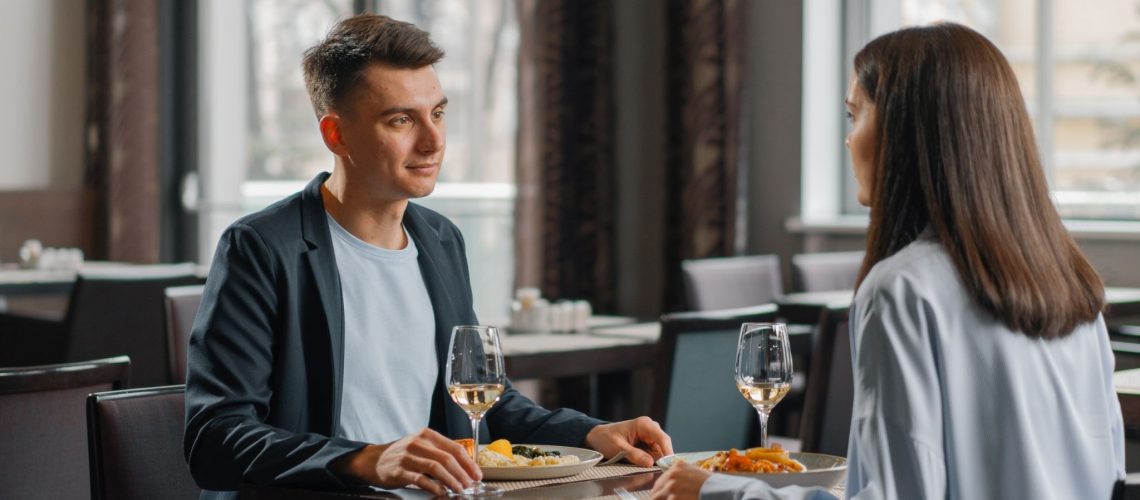
Where a couple sits in a restaurant shapes their entire experience in ways they may not consciously register but will absolutely feel. The geography of romantic dining is a specific science, and the maître d’ who understands it is worth their weight in gold. Corner tables are almost universally preferred by couples because they offer two walls of protection and a full view of the room without the vulnerability of being viewed from multiple angles. Window tables work beautifully when the view is genuinely romantic, whether it is a city skyline, a garden at dusk, or a body of water catching the last light of the evening. Tables in the center of a busy dining room, however well-appointed, almost never feel romantic because they offer no shelter and no privacy.
Private Dining Rooms and Semi-Private Spaces
Some of the most romantic restaurant experiences happen in spaces that exist at the edge of the main dining room rather than within it. Semi-private areas created by low walls, bookshelves, hanging plants, or curtained alcoves give couples the sense of having their own world within the larger world of the restaurant. Full private dining rooms, available in many higher-end establishments, offer the ultimate version of this, an entire room reserved for two people, with personalized service and sometimes the ability to customize the menu and décor in advance.
Food and Menu Design in a Romantic Restaurant
The food at a romantic restaurant needs to do several specific things that food at other kinds of restaurants does not. It needs to be shareable, because sharing food is an act of intimacy and generosity that deepens connection. It needs to be manageable, because struggling with difficult-to-eat dishes breaks concentration and creates self-consciousness at exactly the wrong moment. It needs to be sensory and beautiful, because romantic occasions deserve food that looks like it was made for the moment. And it needs to be delicious in a way that draws responses from both people, reactions of pleasure and surprise that become shared memories in real time.
Tasting Menus for Romantic Occasions
A tasting menu is a particularly powerful choice for a romantic evening because it removes the friction of decision-making and gives both people the same experience simultaneously. When a couple is working through the same sequence of courses together, reacting to the same flavors, sharing the same moments of surprise and delight, the shared experience creates a kind of synchrony that menu-driven à la carte dining rarely achieves. The pacing of a tasting menu also slows the evening down in exactly the right way, giving the conversation room to breathe and the connection room to deepen across two or three hours of unhurried pleasure.
Conclusion
The romantic restaurant features that matter most are not the ones printed on a review or photographed for a social media post. They are the ones felt in the body and remembered years later with a smile. The softness of the light that made everything look more beautiful. The quiet that made every word feel worth saying. The food that arrived as if it had been made for this specific evening and no other. The server who refilled a glass without being asked and disappeared without being noticed. These are the details that separate a dinner from an experience, and an experience from a memory. Understanding what makes a restaurant romantic is ultimately understanding what makes people feel seen, valued, and connected. And in a world that often moves too fast for any of those things, a restaurant that creates that feeling is not just a romantic spot. It is something close to sacred.